


Fire doors have been developed over the years to perform two specific roles in the event of a fire. When open, they provide an obvious and easy means of escape. When closed, they are an effective barrier against the further spread of a fire.
The two specifications of fire door you will see are FD30 and FD60, named for their ability to withstand fire for a remarkable 30 and 60 minutes respectively. But you may be left asking yourself:
Where do I need a fire door in my property?
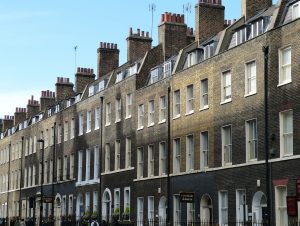
Domestic dwellings
If a home is more than two storeys high, it is required to have a fire door separating the stairwell and every habitable room. This doesn’t include toilets or bathrooms but does include rooms on every level of the house.
Fire doors must also separate loft conversions from the main home and the same goes for integral garages.

Non-domestic buildings
The regulations for non-domestic buildings are far more stringent than their domestic counterparts. The guidance notes are split depending on whether your escape plan is horizontal or vertical through the building. What you must have is the correct signage displayed on either side of the door denoting that it is a fire door and to keep it closed at all times.
Handles must contrast with the main material of the door and so too must the frame and architraves. The frame and architraves must contrast with the surrounding walls, too, so that it’s easy to identify the door as an escape route.
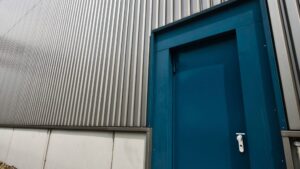
Mixed use buildings
There is an increase in mixed use buildings, with major retail stores on the ground floor and accommodation above. The fire door regulations are relatively simple here, however.
The domestic dwellings follow the guidance described above and the commercial and residential parts of the buildings are separated by fire doors.

Commercial buildings
Non-domestic buildings must conform to the Regulatory Reform (Fire Safety) Order 2005, otherwise known as RRO or FSO. The RRO makes clear that fire doors are crucial to the safe operation of a commercial premises.
The key regulations and guidance to seek are found in Approved Document B: 2006 edition incorporating 2010 amendments. It’s also worth noting that compromising the operation of a fire door in a commercial building can have dire consequences for the business owner.
If a fire door has failed to be fitted, has been jammed open or has be fouled in any way that impedes its performance – the owner of the business can face unlimited fines and prison sentence of up to 2 years.
Safe & Secure manufacture and supply specialist doors and roller shutters, including fire doors, security shutters, roller doors and steel doors. We’ve been serving the people of North Wales and the West of England for over 30 years. With great terms of service, like free estimates and measuring, free installation and 24 hour emergency call outs, our team are your go-to for all commercial doors and shutters. For more information, contact us today.
Related articles across the web
- Loch Lomond hotel fire: Two people killed after blaze hits luxury resort
- Fire safety, prevailing wage led to modular classroom cost overruns
- Residents’ fury over £2m bill to replace Grenfell-style cladding
- California Wildfires Are Halting Production on Shows like Westworld and SWAT
- ‘Consummate professional’ fire chief dies battling blaze